
Cooking outdoors is one of the highlights of any camping trip. Whether you’re spending a weekend at a campground, enjoying a family camping vacation, or exploring the backcountry, having an organized and efficient cooking setup makes preparing meals easier, safer, and far more enjoyable. A well-planned outdoor kitchen not only saves time but also helps keep your campsite clean, organized, and comfortable throughout your adventure.
The perfect outdoor cooking setup isn’t about bringing a full kitchen into the wilderness. It’s about selecting practical equipment, creating an efficient workspace, organizing your gear, and following safe cooking practices. With thoughtful preparation, you can build a cooking area that works well for everything from short overnight trips to extended camping adventures.
Start With the Right Cooking Location
Every successful outdoor kitchen begins with choosing an appropriate cooking area.
Select a flat, stable surface that provides enough room to work comfortably while keeping cooking equipment secure. Position your cooking station away from tents, sleeping areas, and busy walkways to reduce the risk of accidents and create a more organized campsite.
If possible, choose an area that offers some protection from strong winds while still providing excellent ventilation. Never cook inside a tent or enclosed shelter, as cooking equipment can create dangerous conditions when used without proper airflow.
A thoughtfully selected location becomes the foundation of an efficient outdoor cooking setup.
Create a Dedicated Cooking Station
One of the best ways to improve campsite organization is by creating a designated cooking station.
Keeping all cooking equipment together makes meal preparation more efficient and prevents supplies from becoming scattered throughout the campsite. A portable camping table or other stable work surface provides valuable space for organizing cookware, utensils, and cooking equipment.
Arrange your cooking station so frequently used items remain within easy reach while allowing enough space to move safely around hot equipment.
Having one central location for food preparation, cooking, and cleanup helps simplify your entire camping routine.
An organized workspace saves time during every meal.
Choose Reliable Portable Cooking Equipment
Portable cooking equipment is designed to provide convenience while remaining easy to transport.
Camp stoves are among the most popular choices because they offer consistent heat, quick setup, and dependable performance in many outdoor conditions. Compact cooking systems are ideal for smaller groups, while larger portable stoves provide additional cooking space for families or group camping trips.
Before leaving home, inspect your equipment to ensure it is clean, functioning properly, and compatible with the fuel you’ll be bringing.
Reliable equipment helps eliminate unnecessary stress once you arrive at camp.
Organize Your Cookware Efficiently
Keeping cookware organized makes preparing meals much more enjoyable.
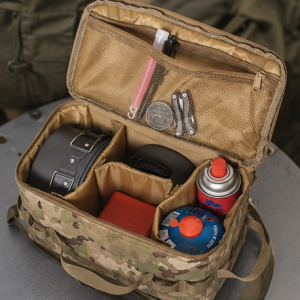
Many campers choose nesting cookware because it reduces storage space while keeping pots, pans, and lids together. Store cooking utensils, serving tools, and cleaning supplies in dedicated containers so everything has its own place.
Grouping similar equipment together allows you to quickly locate what you need without searching through multiple bags or storage bins.
Returning cookware to the same location after each use also makes cleanup and packing much easier.
Good organization keeps your outdoor kitchen running smoothly.
Keep Frequently Used Items Accessible
Certain items are used throughout the day and should remain easy to access.
Cooking utensils, heat-resistant gloves, reusable dishes, water containers, cleaning supplies, flashlights, and fuel should all be stored where they can be reached quickly without disrupting your cooking process.
Frequently used equipment should never be buried beneath larger gear or stored in difficult-to-reach locations.
Simple organization reduces frustration and allows you to focus on enjoying your time outdoors.
Convenience is one of the biggest advantages of thoughtful campsite planning.
Practice Safe Campfire Habits
Many campgrounds provide designated fire rings for campers who enjoy cooking over an open fire.
Before starting any fire, check campground regulations and current fire restrictions. During periods of dry weather or high winds, campfires may not be permitted.
Always build fires only in approved fire rings or designated fire pits. Keep the fire at a manageable size and never leave it unattended.
Have water, dirt, or another approved extinguishing method readily available so the fire can be completely put out before leaving the campsite or going to sleep.
Responsible fire safety protects both campers and the surrounding environment.
Prepare for Changing Weather
Outdoor cooking often means adapting to changing weather conditions.
Wind, rain, and temperature changes can affect both comfort and cooking efficiency. Packing weather-resistant storage containers helps protect cookware and equipment from moisture, while portable canopies or shelters can provide shade or light weather protection when appropriate.
Keep rain gear nearby and secure lightweight equipment if windy conditions are expected.
Preparing for the weather helps ensure your cooking area remains functional throughout your trip.
Flexibility is an important part of successful outdoor cooking.
Keep Your Cooking Area Clean
A clean cooking station creates a safer and more enjoyable campsite.
After each meal, wash cookware promptly, organize utensils, and return equipment to its designated storage area. Wipe down work surfaces and properly dispose of waste according to campground regulations.
Keeping your cooking area clean reduces clutter, discourages wildlife from visiting your campsite, and makes future meal preparation much easier.
Good habits after every meal save time throughout the rest of your trip.
Clean campsites are comfortable campsites.
Store Equipment Properly
Proper storage protects your gear and extends its lifespan.
Allow cookware and portable stoves to cool completely before packing them away. Store fuel safely according to manufacturer recommendations and keep it separate from heat sources.
Inspect your equipment before leaving camp to ensure nothing has been left behind.
After returning home, clean and dry all cooking gear before placing it into storage.
Regular maintenance helps ensure your equipment is ready for your next adventure.
Build a System That Works for You
Every camper develops their own preferred cooking routine over time.
As you gain experience, you’ll learn which equipment you use most often, how to organize your cooking station more efficiently, and which storage methods save the most time.
Don’t be afraid to adjust your setup after each trip. Small improvements often make a significant difference during future adventures.
The perfect outdoor kitchen is one that matches your camping style and allows you to enjoy cooking without unnecessary stress.
Experience naturally leads to greater efficiency.
Final Thoughts
Building the perfect outdoor cooking setup is about more than choosing the right equipment. A carefully organized cooking station, dependable portable gear, thoughtful cookware storage, proper campfire safety, and consistent cleanup habits all contribute to a smoother and more enjoyable camping experience.
Whether you’re preparing meals during a weekend getaway or an extended outdoor adventure, an organized cooking setup allows you to spend less time managing equipment and more time enjoying nature.
With the right planning and a simple system that fits your needs, outdoor cooking becomes one of the most rewarding parts of every camping trip.


0 Comments